IN-PROGRESS
Toasted Rye Tea
We sourced rye berries from Castle Valley Mill. We toast them in a pan, on low-medium heat, until the berries develop a light golden hue and are lightly aromatic.
Lacto Roasted Squash Trimmings
This project utilizes the guts, trim, and skin of honeynut squash that was roasted without oil. The squash was cooked through fully, developing a small amount of color, before being subjected to lacto...
Roasted Soybean Powder
This project explores kinako, a roasted soybean flour commonly used in Japanese cuisine. Traditionally, it is produced by roasting soybeans, peeling them, and grinding them into a fine powder, resulti...
Beet, Apple, Koji Sorbet
This recipe involves juicing golden beets alongside apple, incorporating rice koji, and cooking the mixture down on the stovetop. We use maple syrup as the sweetener, along with the natural sugars fro...
Cranberry Bean and Sunchoke Miso
This experiment involves the creation of a composite miso paste using a blend of legumes and tubers. We are utilizing cranberry beans, soybeans, and roasted Jerusalem artichokes (sunchokes) as the sub...
Grain Tempeh Burger
This first iteration uses spelt and is a play on the Noma quinoa burger. The concept involves slightly grinding the dry grains, steaming them until just cooked through, and forming them into a burger...
Kinako Ice Cream
This iteration builds upon the previous soy base but introduces a reduction step and the addition of kinako (roasted soybean flour). Starting with 559 g of the base mixture, we cooked it down to 415 g...
Koji-Blackened Vegetables
We have been experimenting with the effects of koji enzymes and inoculation on flavor during the blackening process for various substrates. This experiment involved taking a number of vegetables—inclu...
Koji-Inoculated Tofu
This experiment explores the potential of transforming tofu into a cheese-like product using koji. The process involves salting the tofu, inoculating it, and allowing the mold to grow, followed by dry...
Lacto Barley and Soy
This experiment involves using 400 g of blended, cooked barley and soybeans. The mixture is combined with water and salt to undergo lacto-fermentation.
Malted Oat Syrup
This experiment applies a technique similar to traditional Korean brown rice syrup to rolled oats sourced from River Valley. The process involves using diastatic malt powder to convert the starches in...
Peanut Ice Cream Base
This experiment explores the creation of a frozen dessert using raw peanuts. The process involves creating a base by cooking down the nuts with water and sweeteners, then processing the mixture using...
Soy Ice Cream Base
This experiment focuses on developing a dairy-free ice cream base using soybeans. The aim is to utilize the Ninja Creami to achieve a texture and flavor profile reminiscent of White Rabbit candy. We a...
Soy Yoghurt
This project represents the first batch of trials in an attempt to create a sustainable alternative to dairy yogurt. The goal is to explore ingredients that are cheaper, easier to grow, and potentiall...
Toasted Barley Kombucha
This experiment explores a fermentation process using a barley tea similar to mugicha. It utilizes toasted barley to create a base tea, which is then inoculated with a starter culture and a piece of t...
Malted Grain Milks
This experiment utilizes malt, similar to how it is used to provide amylase in industrial oat milk production, to break down starches in grains into sugars. This technique allows for the creation of a...
Malted Stale Bread Caramel
This experiment utilizes stale sourdough bread to create a caramel by employing malt enzymes to break down starches into sugar. It presents an interesting opportunity to create delicious alternatives...
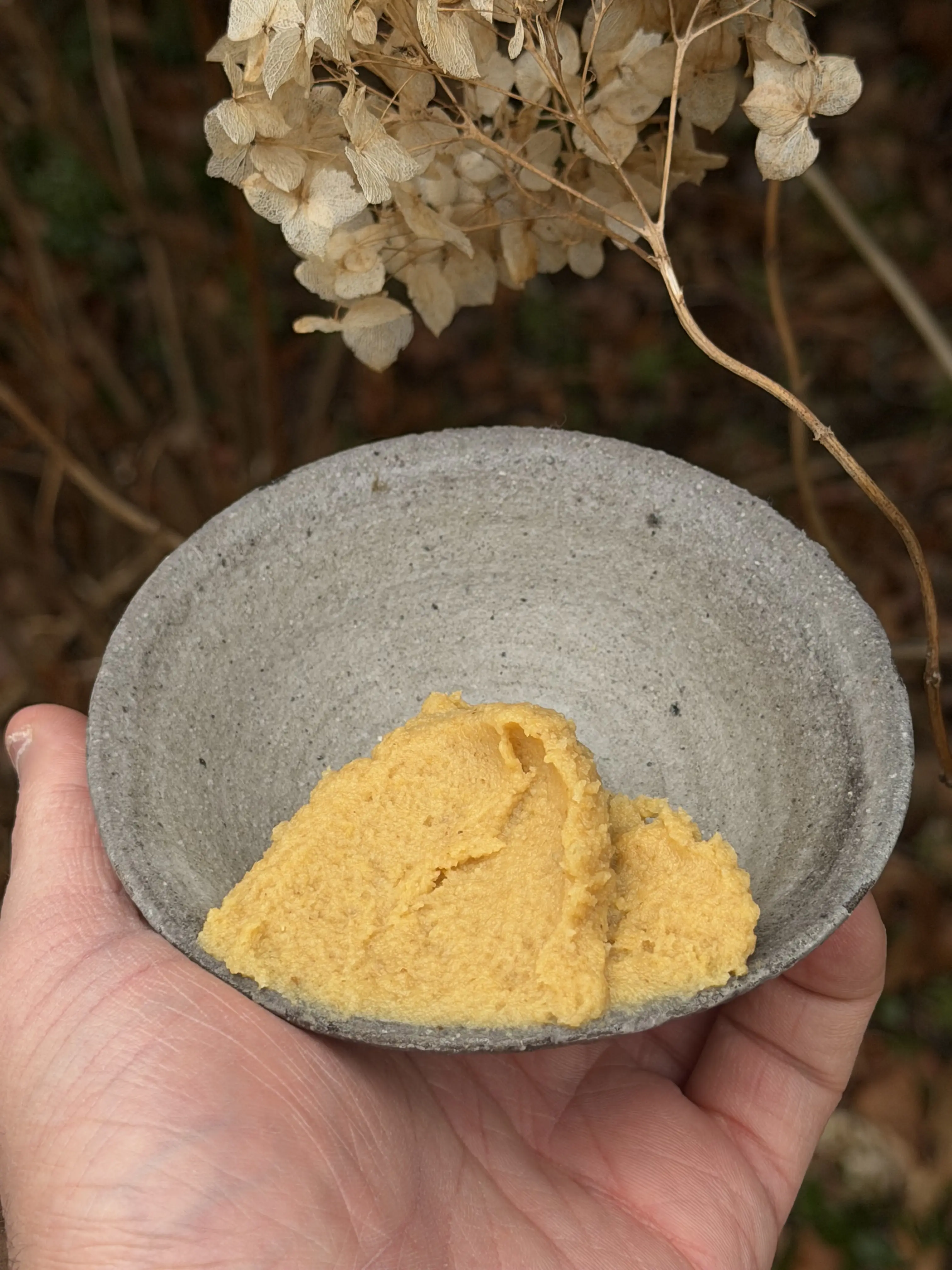
Grits Miso
This experiment involves creating a fermented paste using grits. The grits are toasted prior to cooking to impart a richer flavor, then combined with fresh koji to ferment.
Soy Milk
This project serves as an attempt to create a sustainable alternative to dairy, utilizing ingredients that are cost-effective, easy to grow, and extensible enough to fill various culinary niches. Whil...
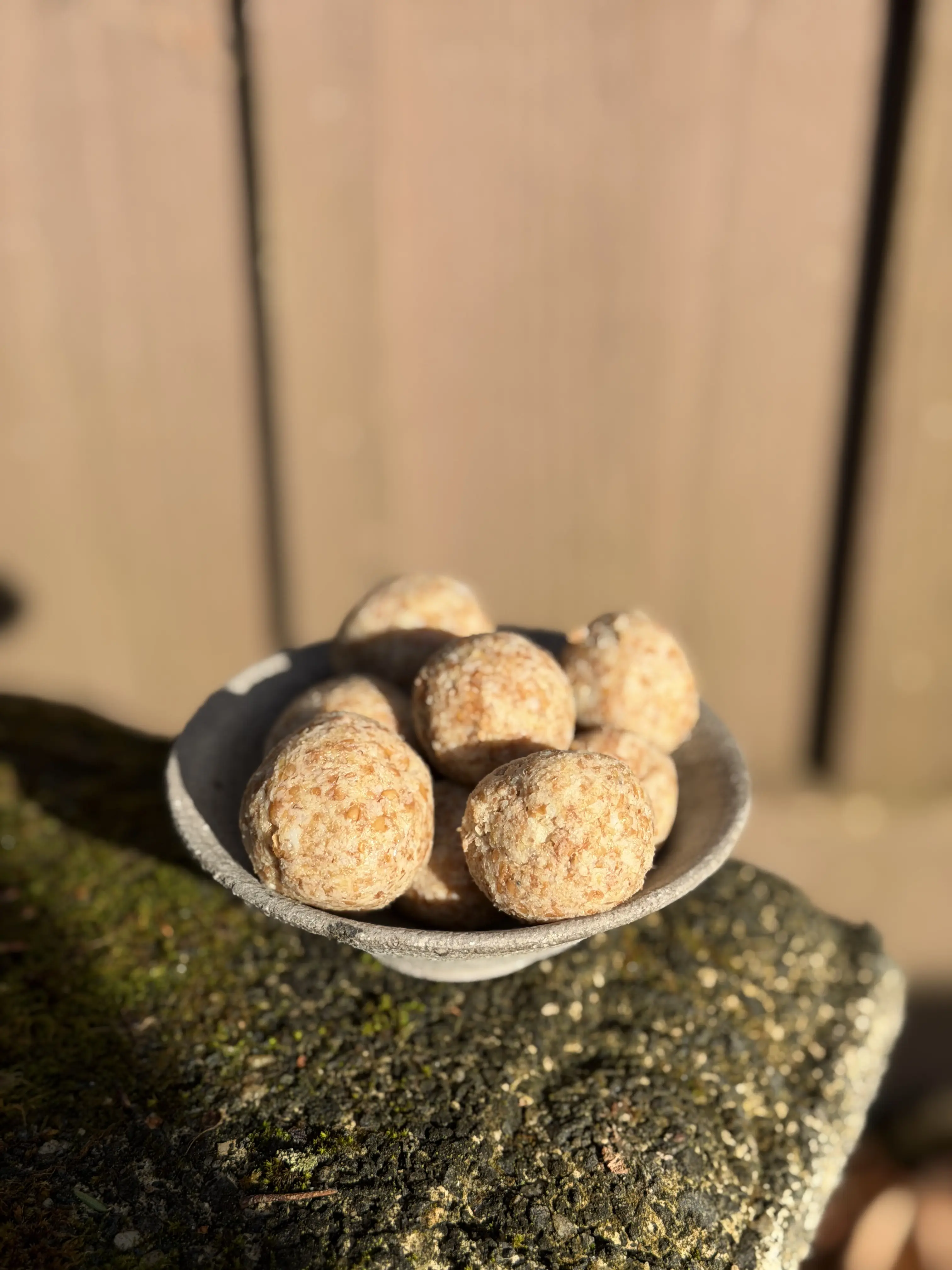
Shio Koji Grain Cheese
This experiment aims to mimic the lactic, cheesy qualities of mozzarella by fermenting grains, a koji-fied variation on the Lebanese ‘poor man’s cheese’ keshek el fouqara. The general theory is that f...
Einkorn Pasta
This experiment documents several tests for making einkorn pasta. The first set of tests uses 00 einkorn flour from Wild Hive, exploring how different kneading times affect the dough. A second test in...
Pasta
Loading cards...
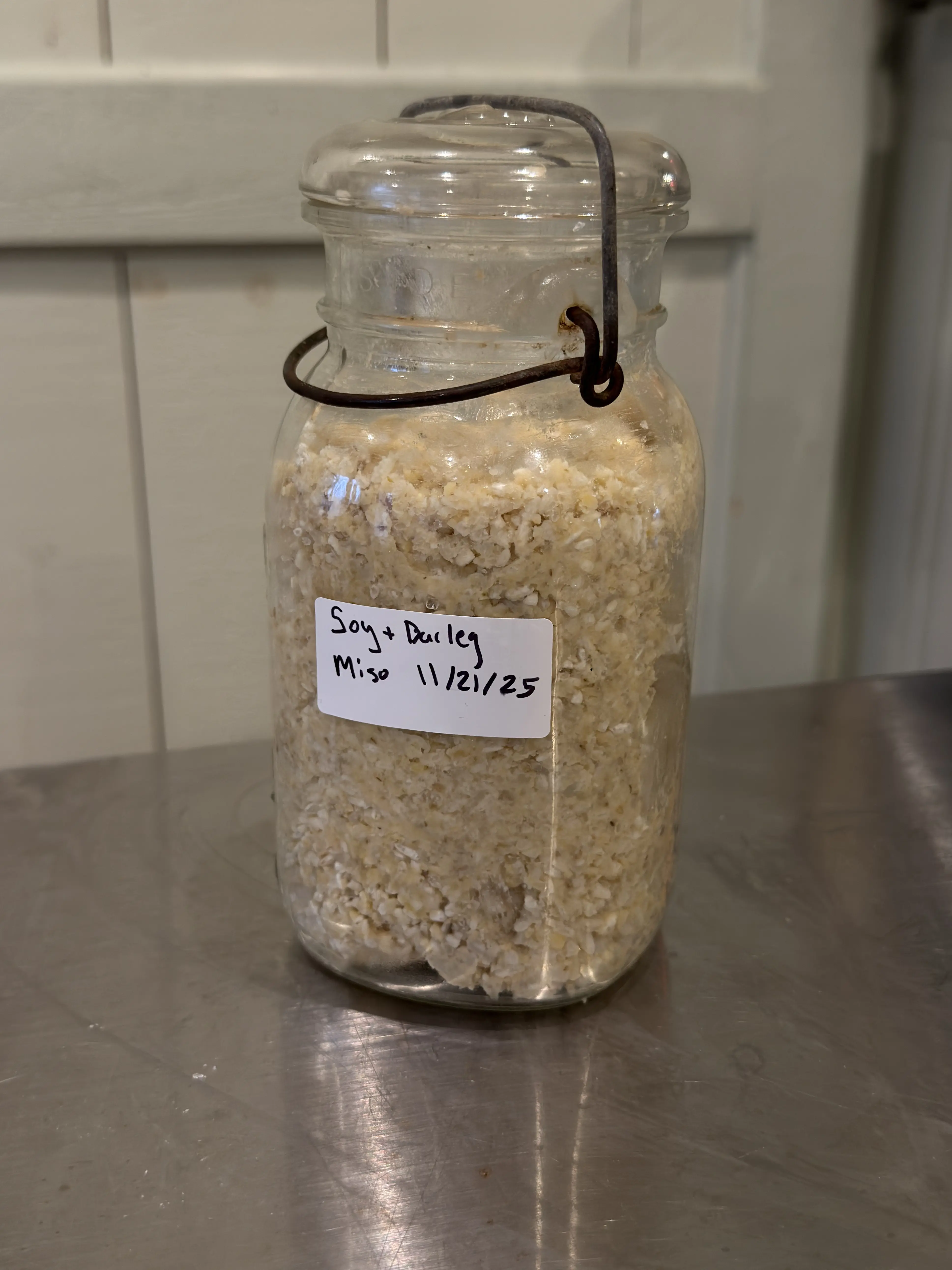
Barley Soy Miso
This is an awase-style miso, using a mix of barley from River Valley Community Grains and soybeans as the substrate. The process involves cooking the grains and beans, combining them with koji, and al...
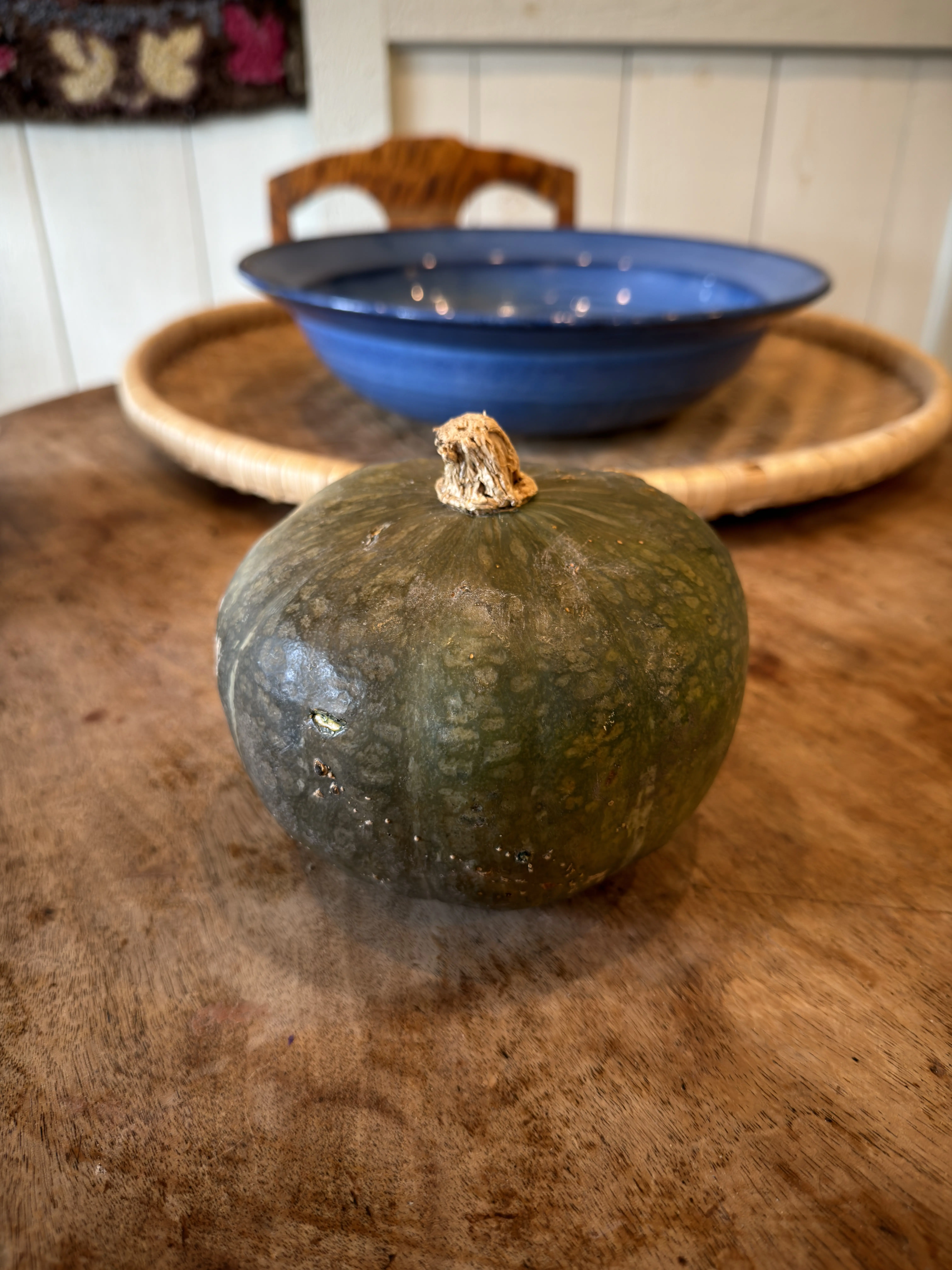
Blackened Squash
This experiment uses buttercup squash, which was peeled and cut into wedges. The goal is to transform the squash using the blackening technique, a process similar to making black garlic.
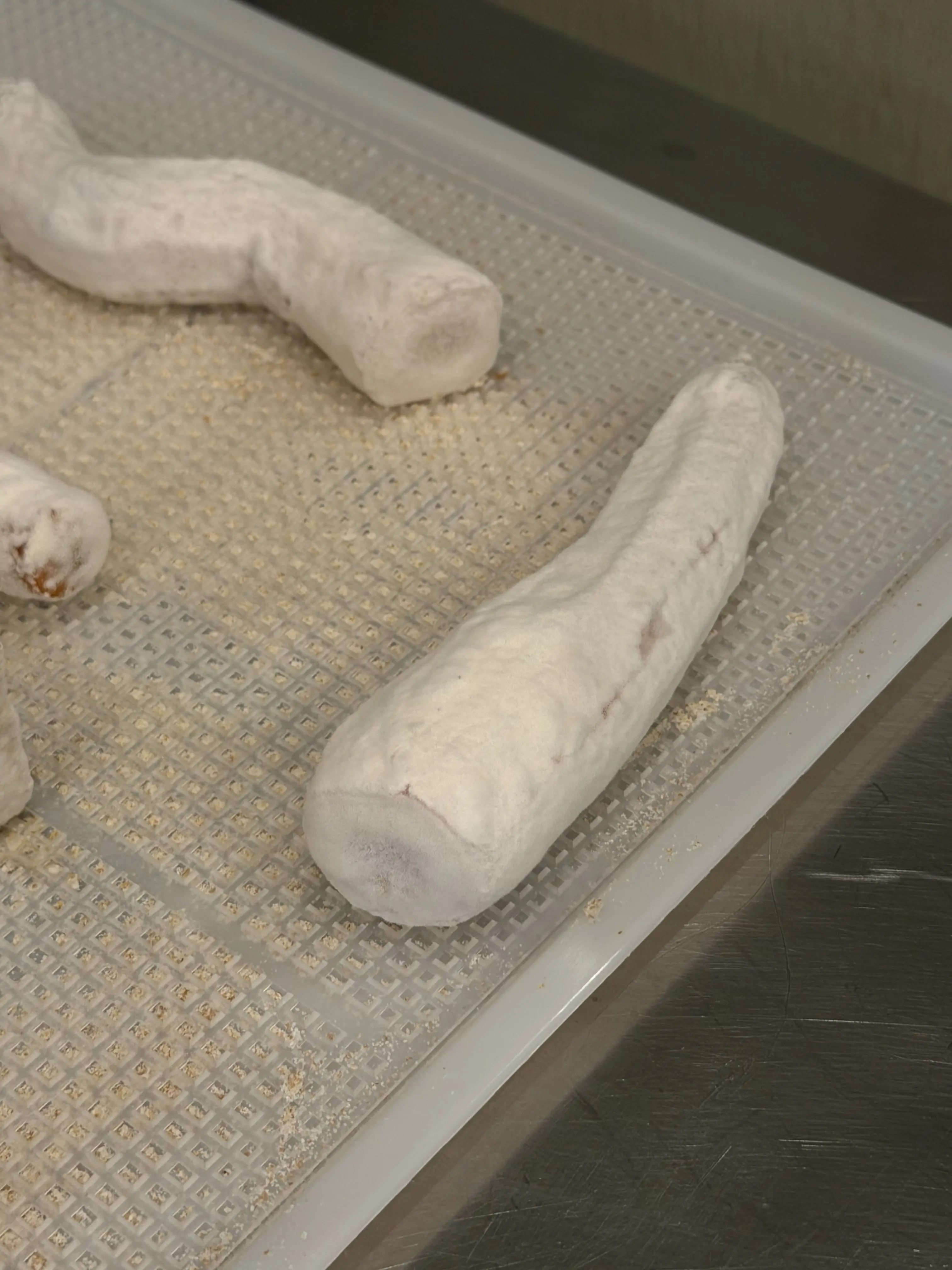
Carrot Charcuterie
This is a trial run using peeled carrots leftover from the Carrot Bug project. A small amount of salt was added to have them release a little bit of moisture before being vacuum-sealed and chilled in...
.webp)
Koji (Pearled Barley)
This process outlines the steps for making koji using barley as the substrate. To ensure even distribution, the spores are first mixed with toasted barley flour before being used for inoculation.
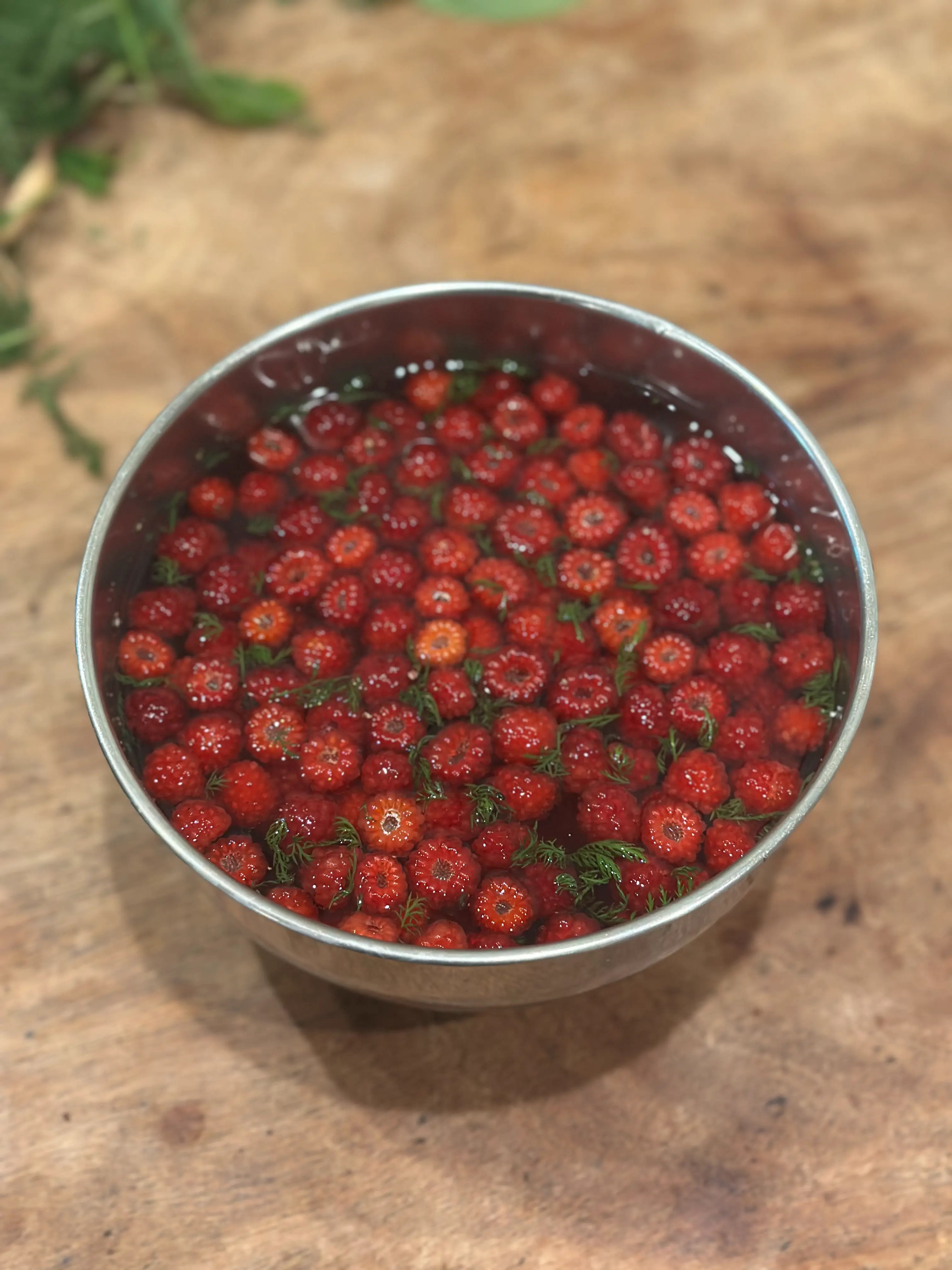
Lacto-Wineberries
This is a lacto-fermentation of foraged wineberries. The berries are combined directly with 2% salt by weight, which will draw out their juices to create a brine.
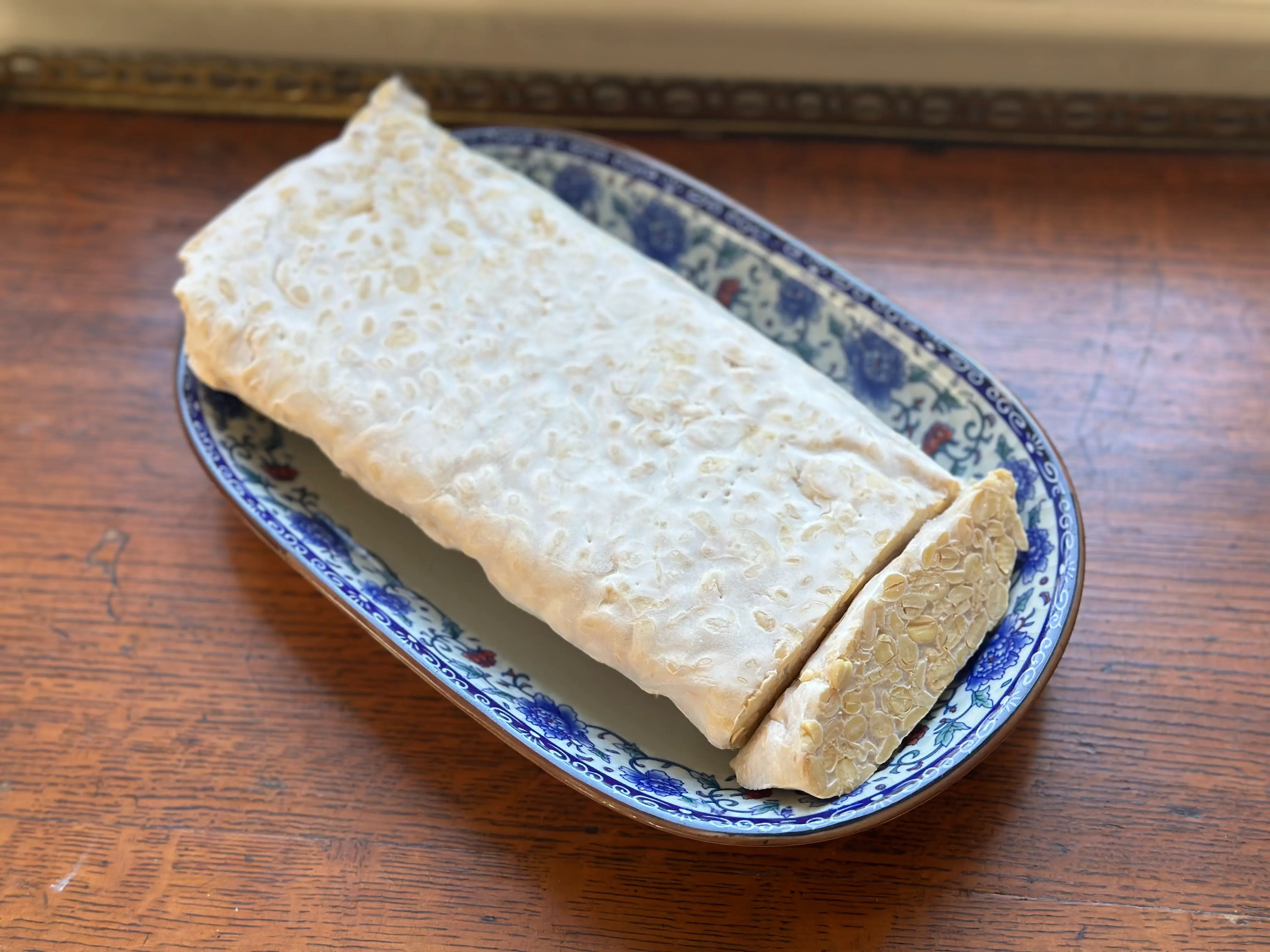
Soybean Tempeh
This is a first attempt at making tempeh from scratch. The goal is to compare the flavor and texture of a homemade version with commercial products and to establish a baseline process for future exper...
Black Emmer Tempeh
This experiment involved blackening emmer tempeh over the course of a month at 140°F, a process similar to making black garlic. At this temperature, the enzymes created by the mold (rhizopus oligospor...
Mushroom Garum
Loading cards...
Resinous Polypore Garum
Approximately 3-5 pounds of resinous polypore were foraged in Connecticut. After harvesting, the mushroom was trimmed and separated into its tender flesh and woodier parts for two different applicatio...
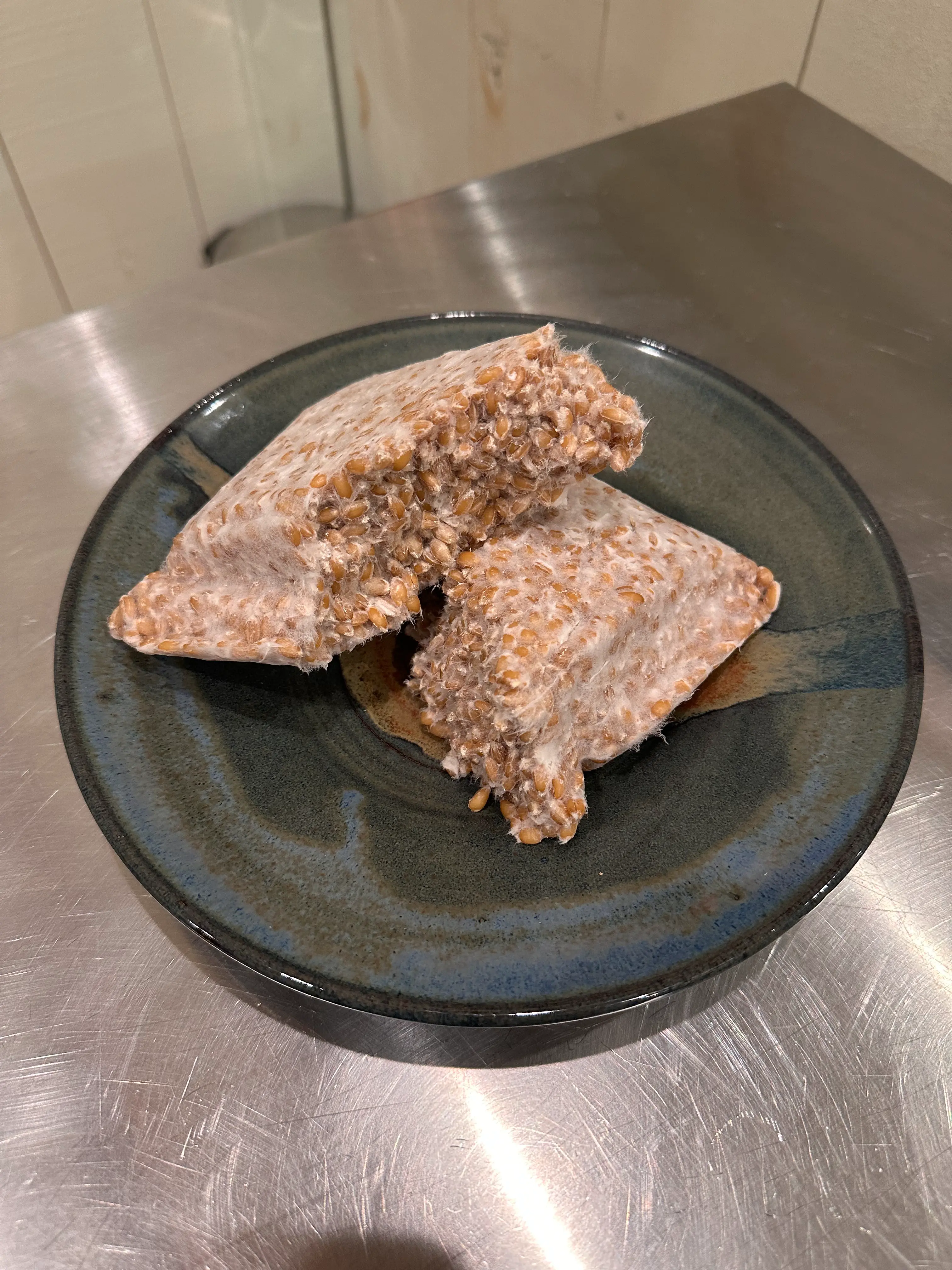
Emmer Tempeh
This was prepared similarly to soybean tempeh, using black emmer from Wild Hive Farm.
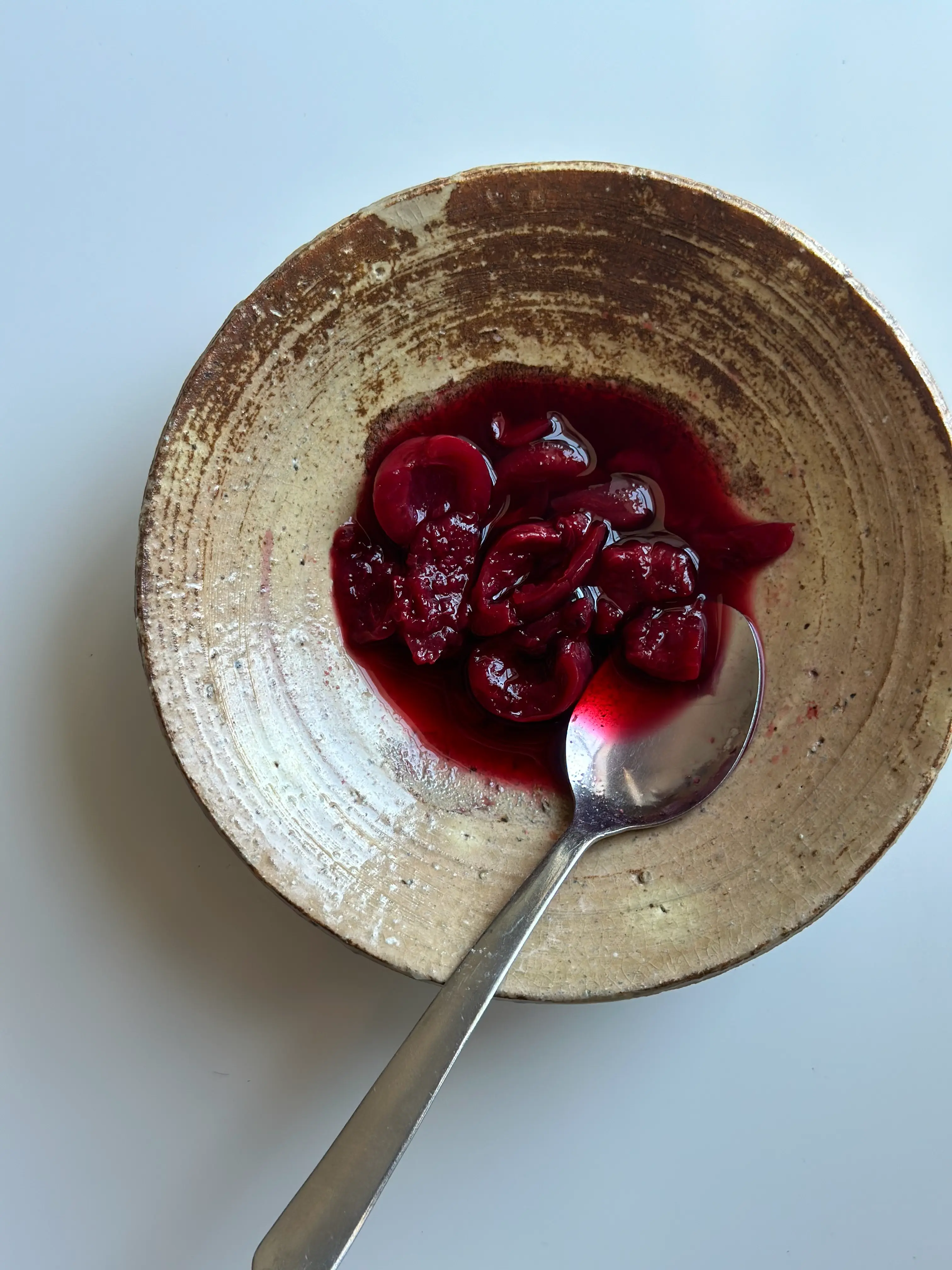
Cherry Umeboshi
This experiment is a variation on traditional Japanese umeboshi, which is made with plums. This version uses cherries, subjecting them to a lacto-fermentation before partially dehydrating them to crea...
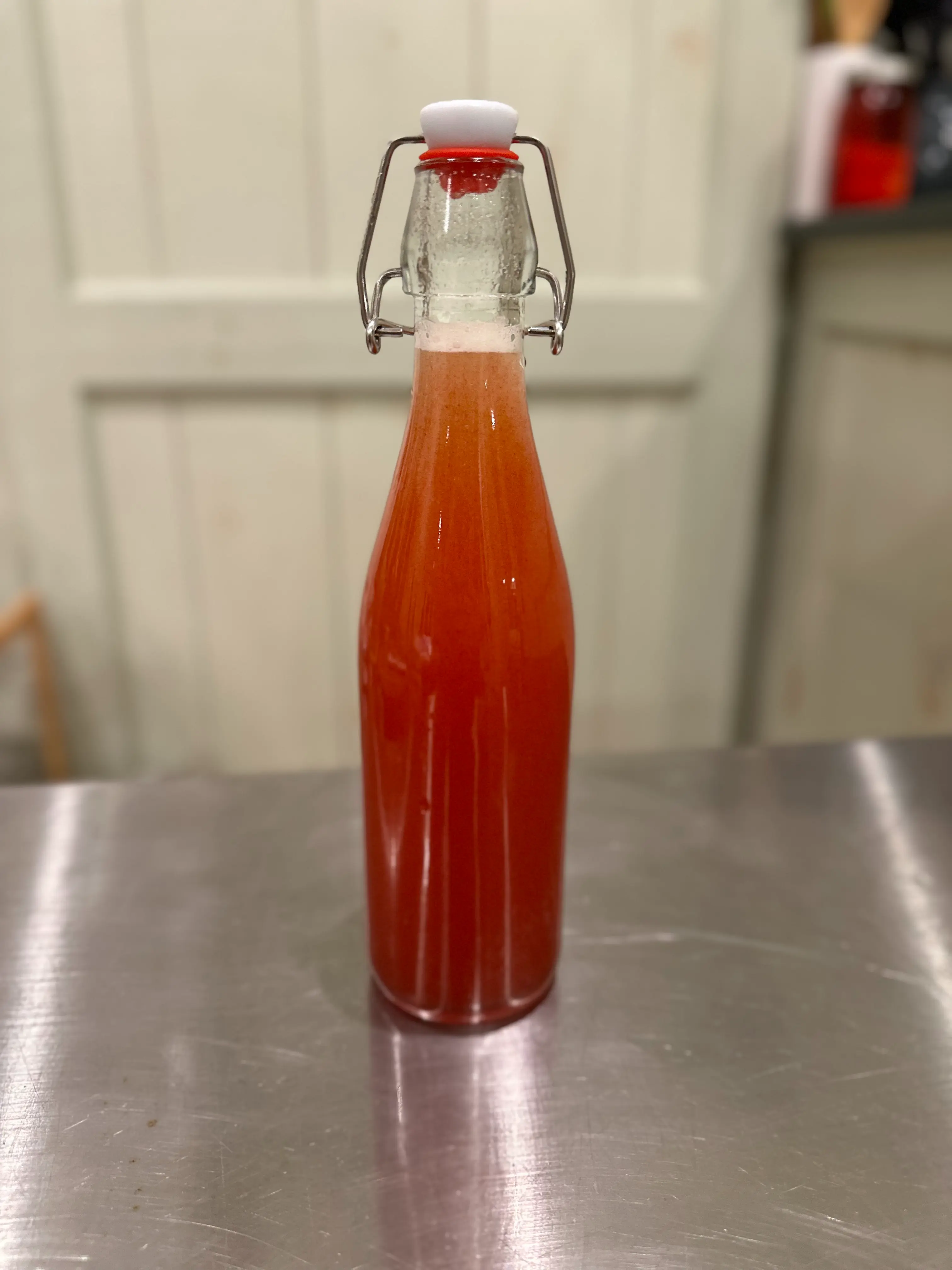
Sour Plum Soda
This is a naturally fermented soda made from plums using a carrot bug as the starter. The process involves blending ripe and slightly underripe plums, diluting the juice, and allowing it to ferment at...
Blackened Tempeh "Chocolate"
The blackened tempeh was dehydrated for approximately four hours and then ground into a powder. This powder was mixed with vegetable oil and sugar to create a paste with a texture comparable to chocol...
Blackened Tempeh
This project is an attempt to create a savory, chocolate-like product from tempeh using blackening. By holding the tempeh at a constant high temperature for an extended period, the goal is to develop...
Koji-Salt Cured Anise Hyssop Flowers
This experiment is an attempt to create a salt cure using anise hyssop flowers from Furnace Creek Farm. By combining the flowers with koji and a high concentration of salt, the goal is to preserve the...
Lacto-Strawberries
This is an experiment in lacto-fermentation, using strawberries with a 2% salt brine created from their own juices.
Malted Oat Amazake
This experiment is a test to see how the enzymes from malt and koji combine to make a hybrid amazake. Traditional amazake made with koji produces glucose, a sugar that is about two-thirds as sweet as...
Malted Oat Milk
In industrial oat milk production, commercial amylase is often used to break down starches for a smoother texture. This experiment is an attempt to use the enzymes naturally present in Light Munich ma...
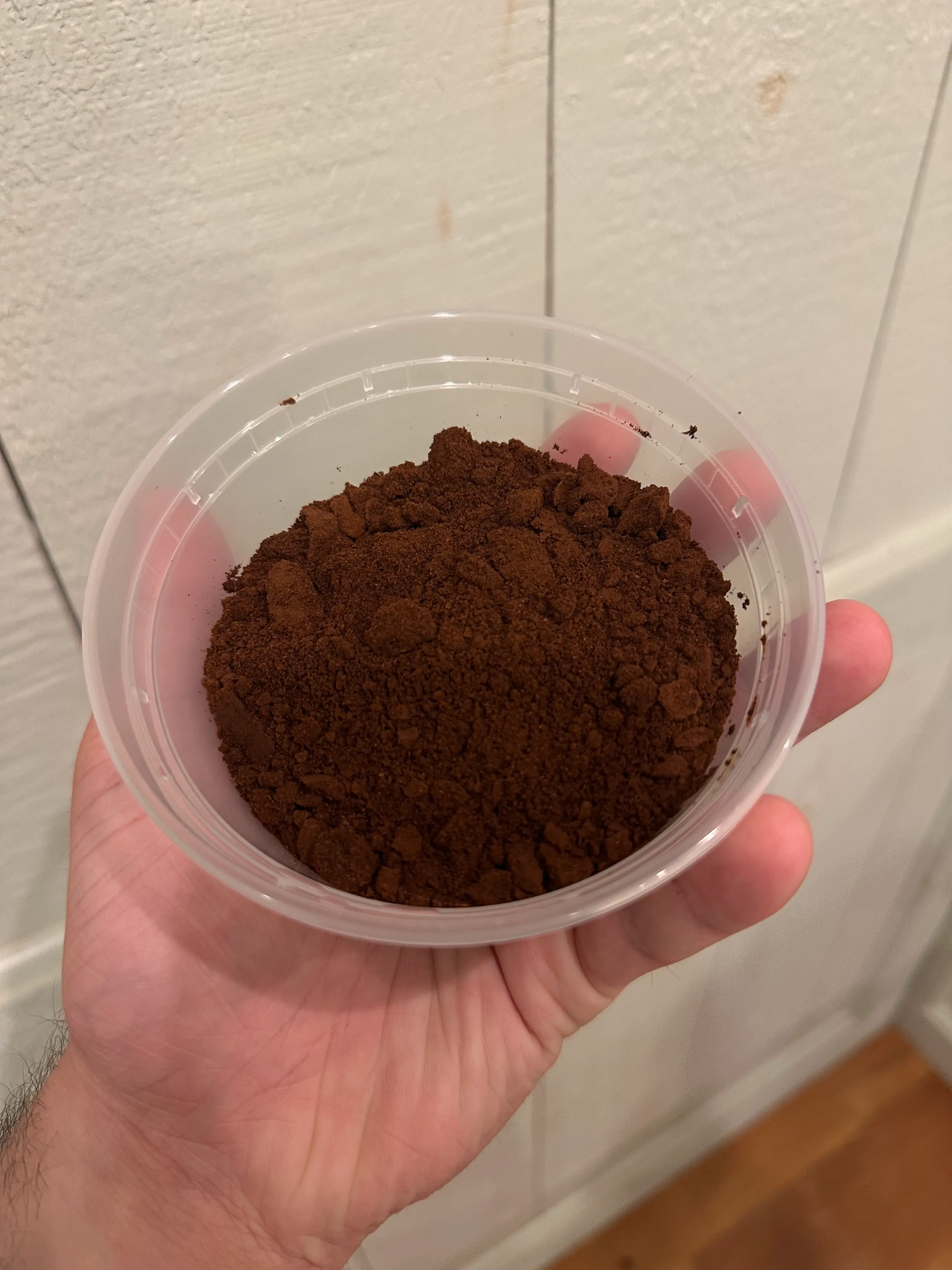
Soybean Koji "Coffee"
This experiment uses the blackening technique on soybeans with koji to create a potential coffee or chocolate substitute. The process involves incubating the soybeans with 10% of their weight in koji...
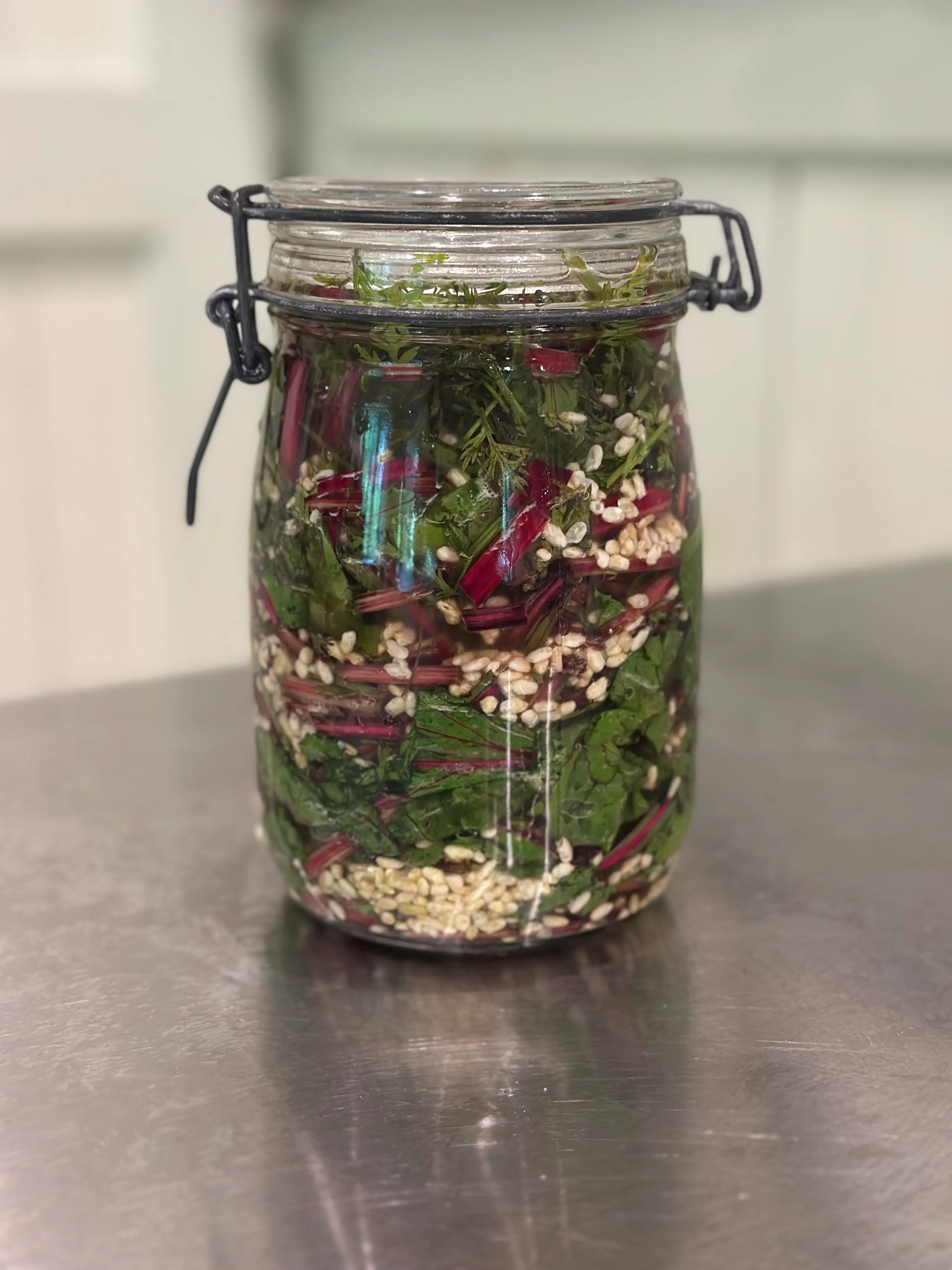
Tops Garum
This experiment is an attempt to create a garum, a type of amino sauce, from what would otherwise be a waste product. This version uses carrot greens and koji to produce a savory, fish sauce-style con...
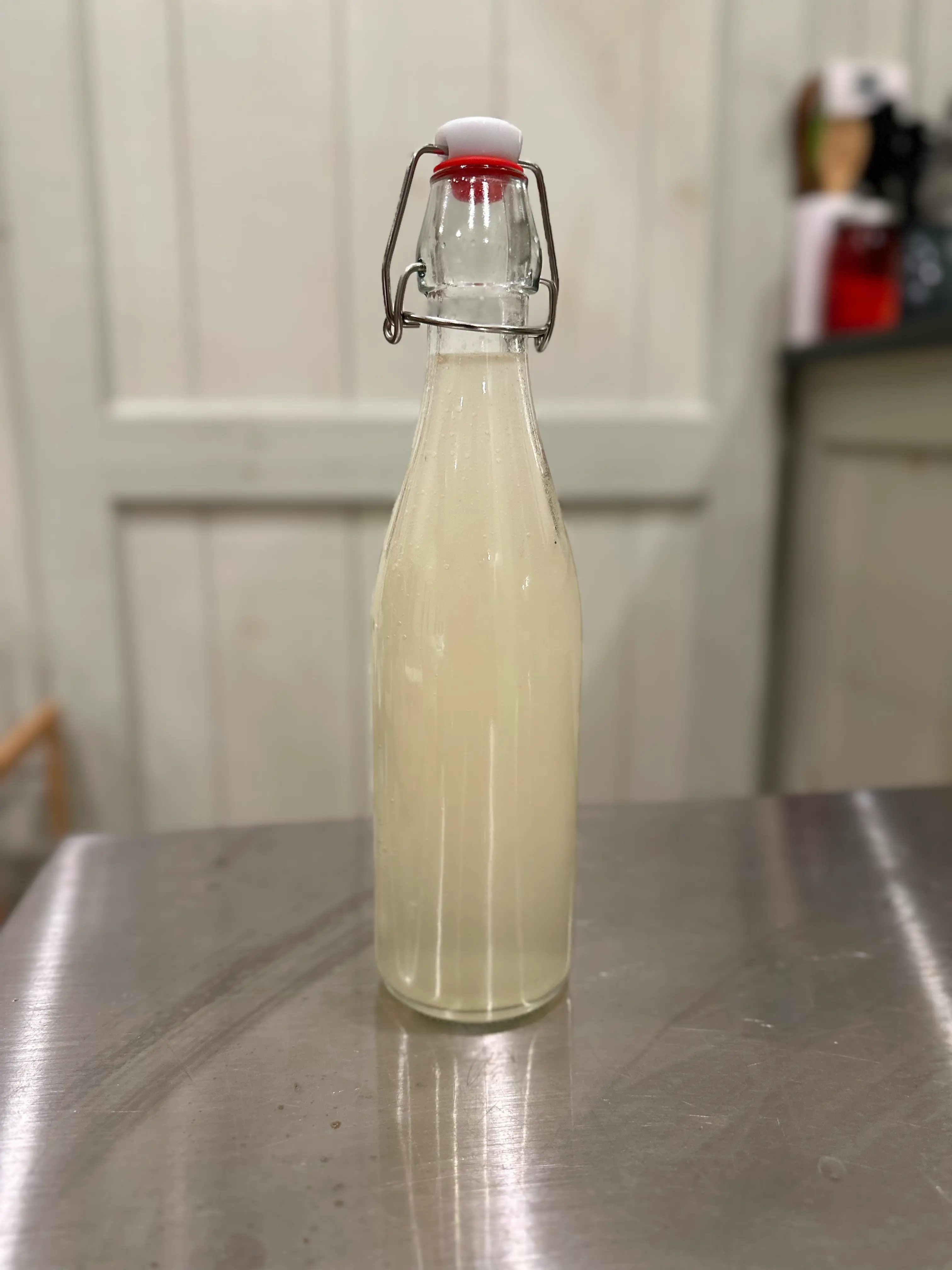
Unripe Peach Cheong Soda
This is an experiment to create a fermented soda using the previously made unripe peach cheong. A portion of the cheong is combined with water and an active carrot bug starter. The goal is to ferment...
Lacto Cherries
This is a simple lacto-fermentation of cherries, using a 2% salt brine. A small amount of water was added to ensure the fruit remained submerged.
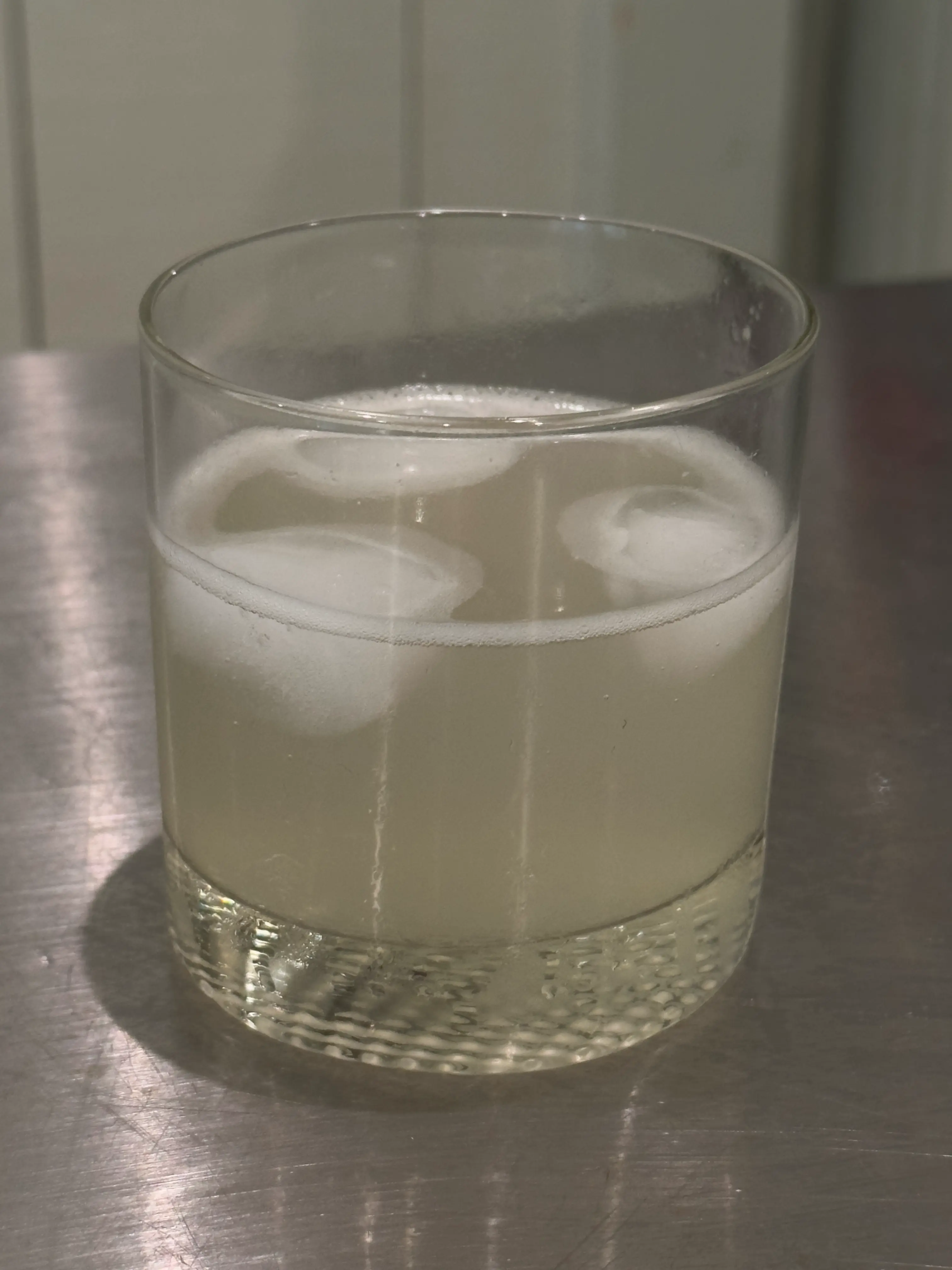
Drinks
This project is an attempt to make satisfying drinks—sweet, sour, creamy, and more—using only ingredients from the Northeast. We will experiment with fermentation to achieve unique flavors through nat...
Red Cabbage, Apricot, Rye
A puree made from roasted lacto-apricot, apple, mustard, vinegar, and agar

Sweeteners
This project is centered on creating sweeteners using solely products from the Northeast. This is a significant challenge, as it excludes traditional sweeteners like cane sugar or sugar beet-derived s...
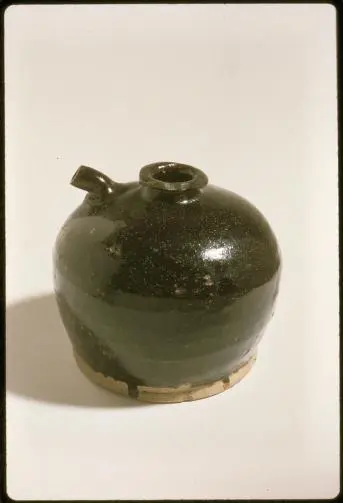
Umami
This project focuses on creating umami-rich foods like garums, misos, tamaris, and shoyus using ingredients grown in the Northeast.
Blackened Beets
This experiment explores two variations of blackened beets. Beets are a compelling candidate for this process due to their high sugar content. Much like roasting develops their flavor, blackening may...
Blackened Tomato
This experiment, started on July 22, 2025, documents three variations of blackened tomatoes. The tomatoes are seconds from Maple Bank Farm. Being riper, they contain more sugars, which is likely benef...
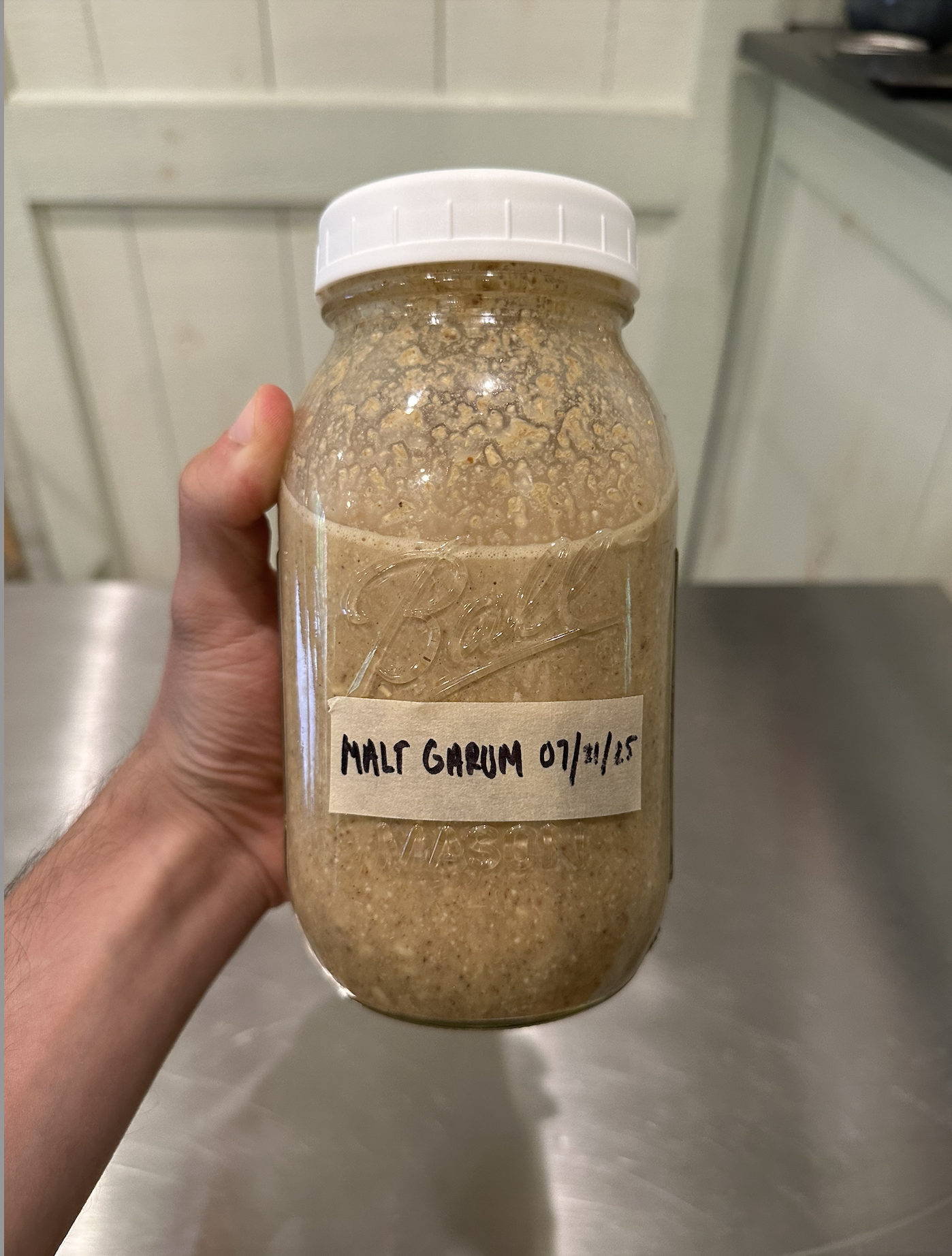
Malt Garum (Diastatic Light Munich)
This experiment is an enzymatic ferment using Light Munich malt (from Valley Malt) and koji (from Rhapsody Foods). The malt is ground to a relatively fine consistency, coarser than flour, to break dow...
Malt-Umami
Loading cards...
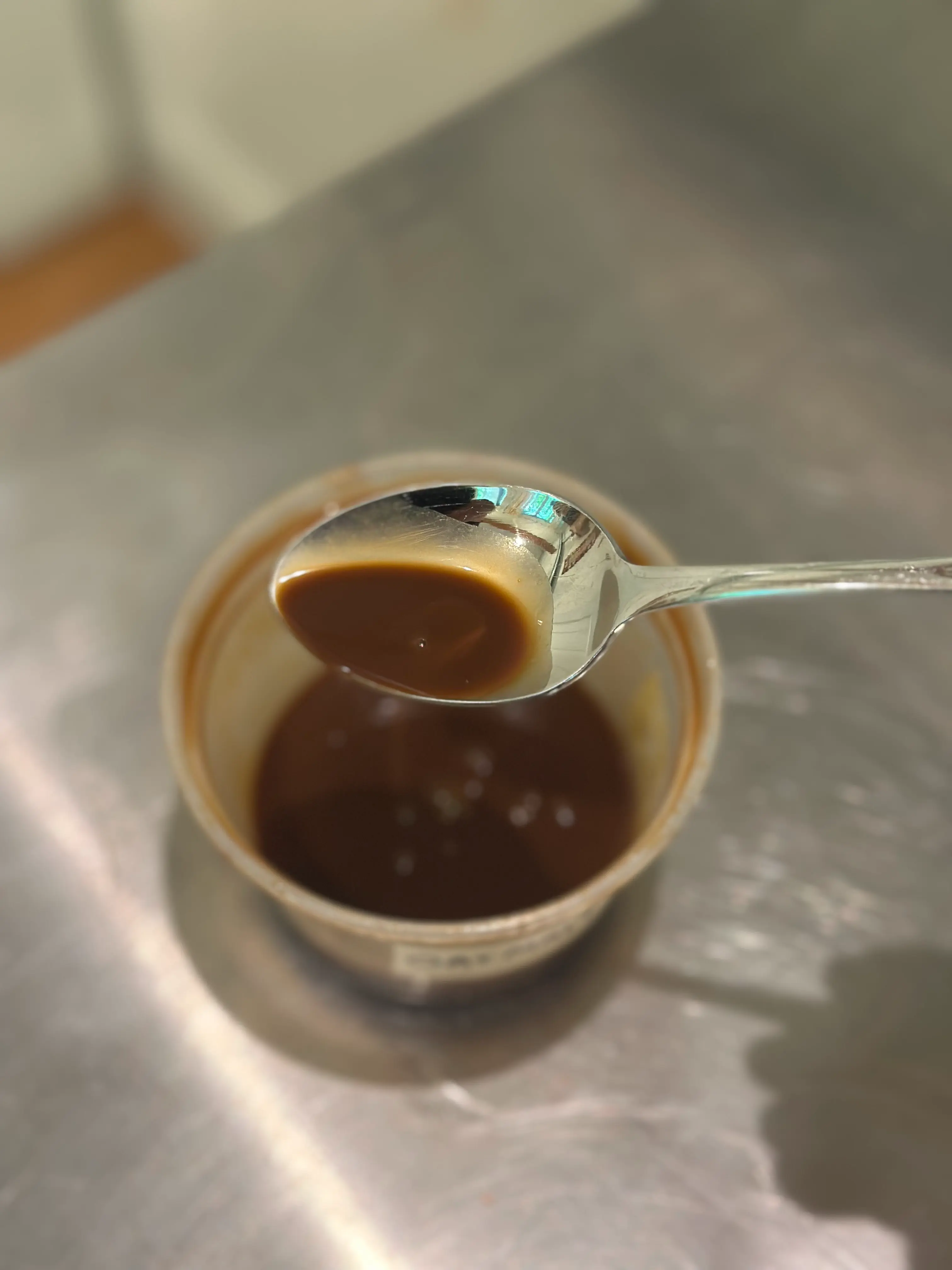
Oat Malt Garum
This is a garum using oats, Light Munich malt from Valley Malt, and koji. The oats and malt were lightly blended before being combined with the other ingredients and held at a high temperature for an...
Tofu Sheet Krupuk
This recipe is an experiment to create a krupuk-style cracker using tofu sheet. It is inspired by traditional Indonesian krupuk, which is typically made from a gelatinized and dried paste of Tapioca S...
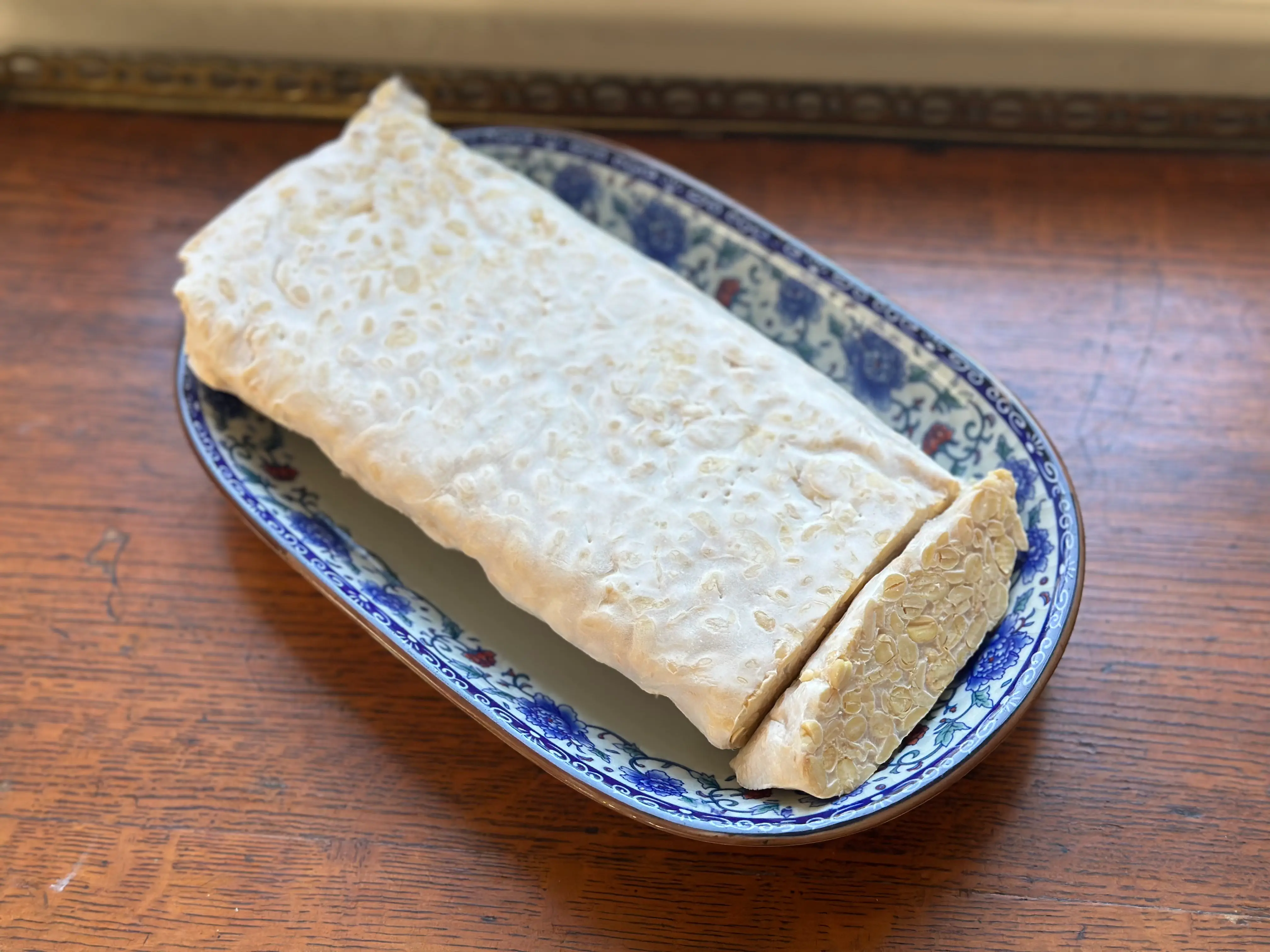
Tempeh
Tempeh is a traditional Indonesian food made from soybeans bound together in the firm mycelium of the mold Rhizopus oligosporus. Thanks to its fermentation process, it has a nutty, earthy flavor and a...
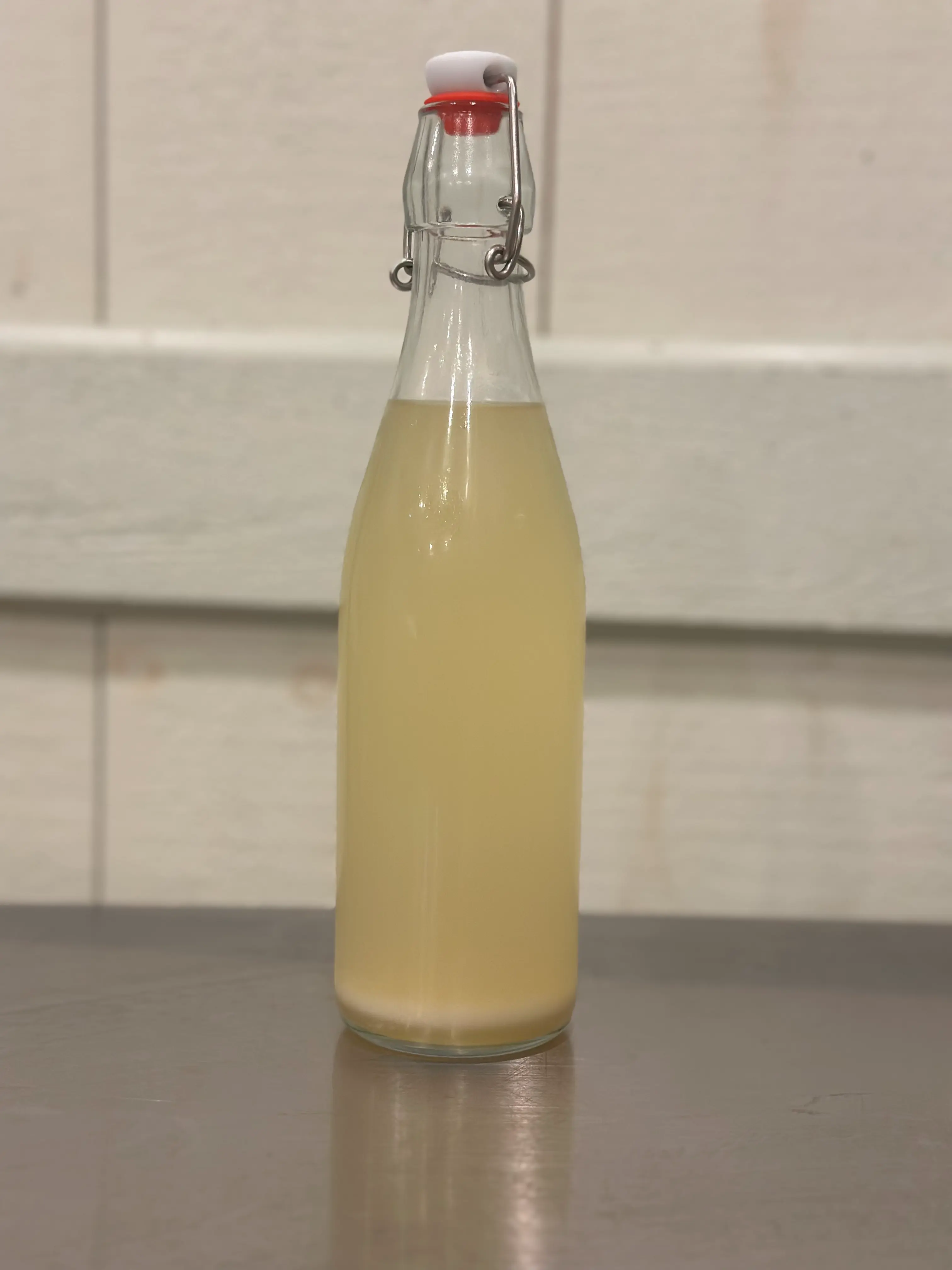
Lacto-Amazake (Buckwheat)
This experiment is a test using a previously made clarified buckwheat amazake. The amazake was diluted with water and combined with a yogurt starter in a flip-top jar. The goal is to simultaneously la...
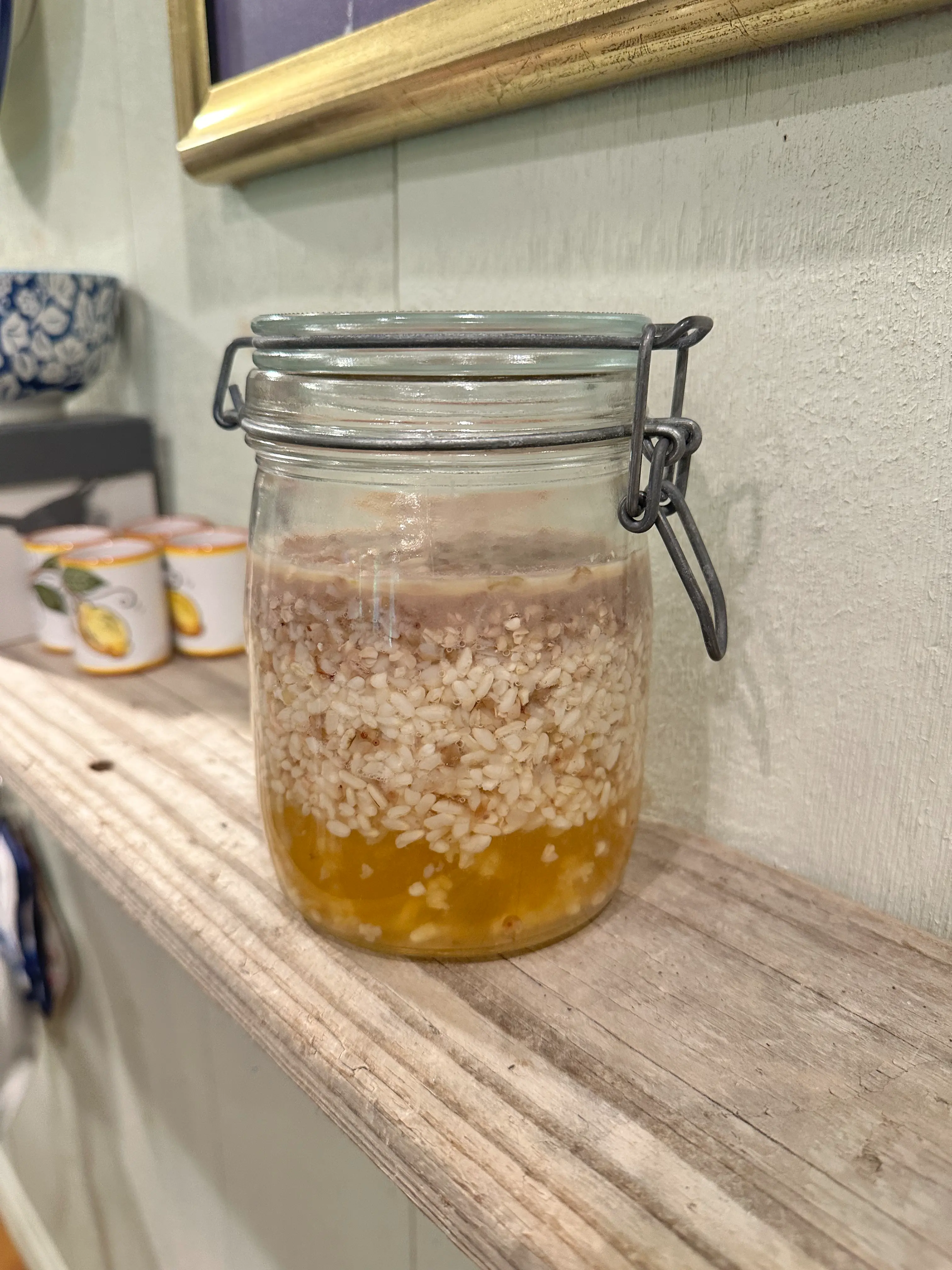
Buckwheat Amazake
This experiment explores a variation on traditional amazake, a fermented rice drink, by using buckwheat and koji from Rhapsody Foods.
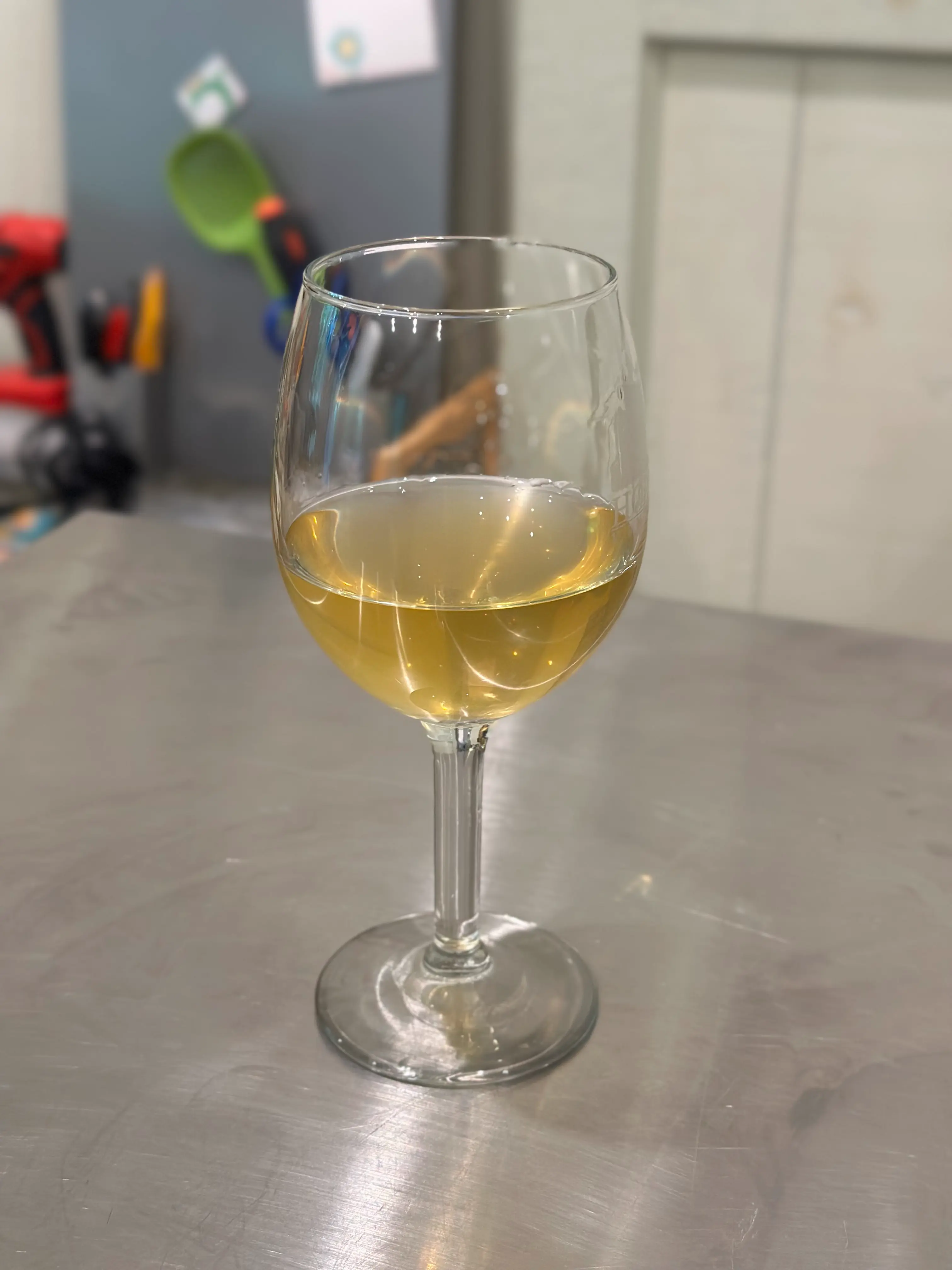
Clarified Amazake
By using freeze clarification, a technique where a frozen substance’s components (which have different melting temperatures) slowly drain through a cheese cloth over a bowl, a cloudy liquid can be tur...
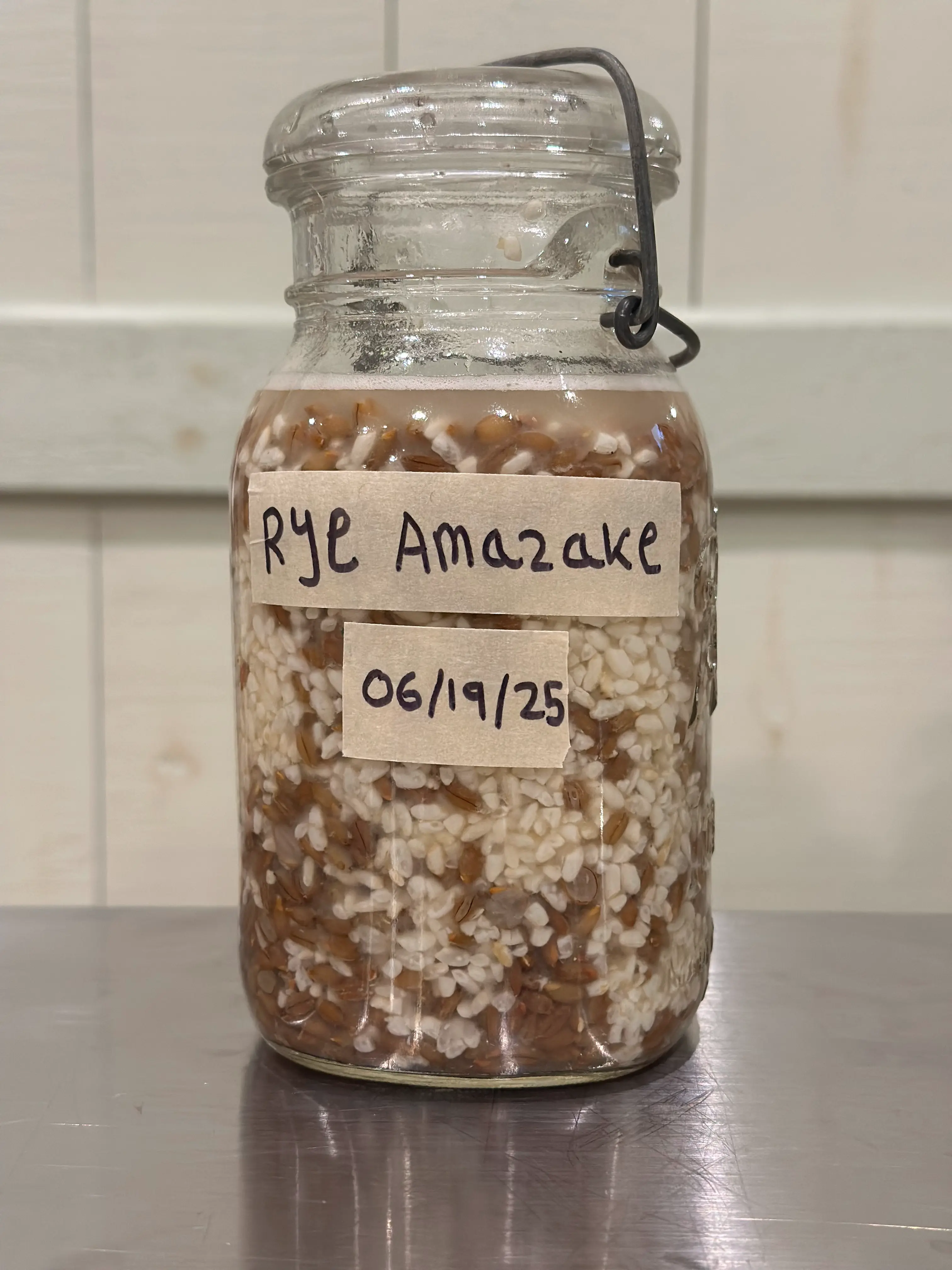
Rye Amazake
This experiment focuses on making amazake using rye berries. The process involves boiling the rye berries and then adding dried koji. The mixture will be left overnight in a fermentation chamber, held...
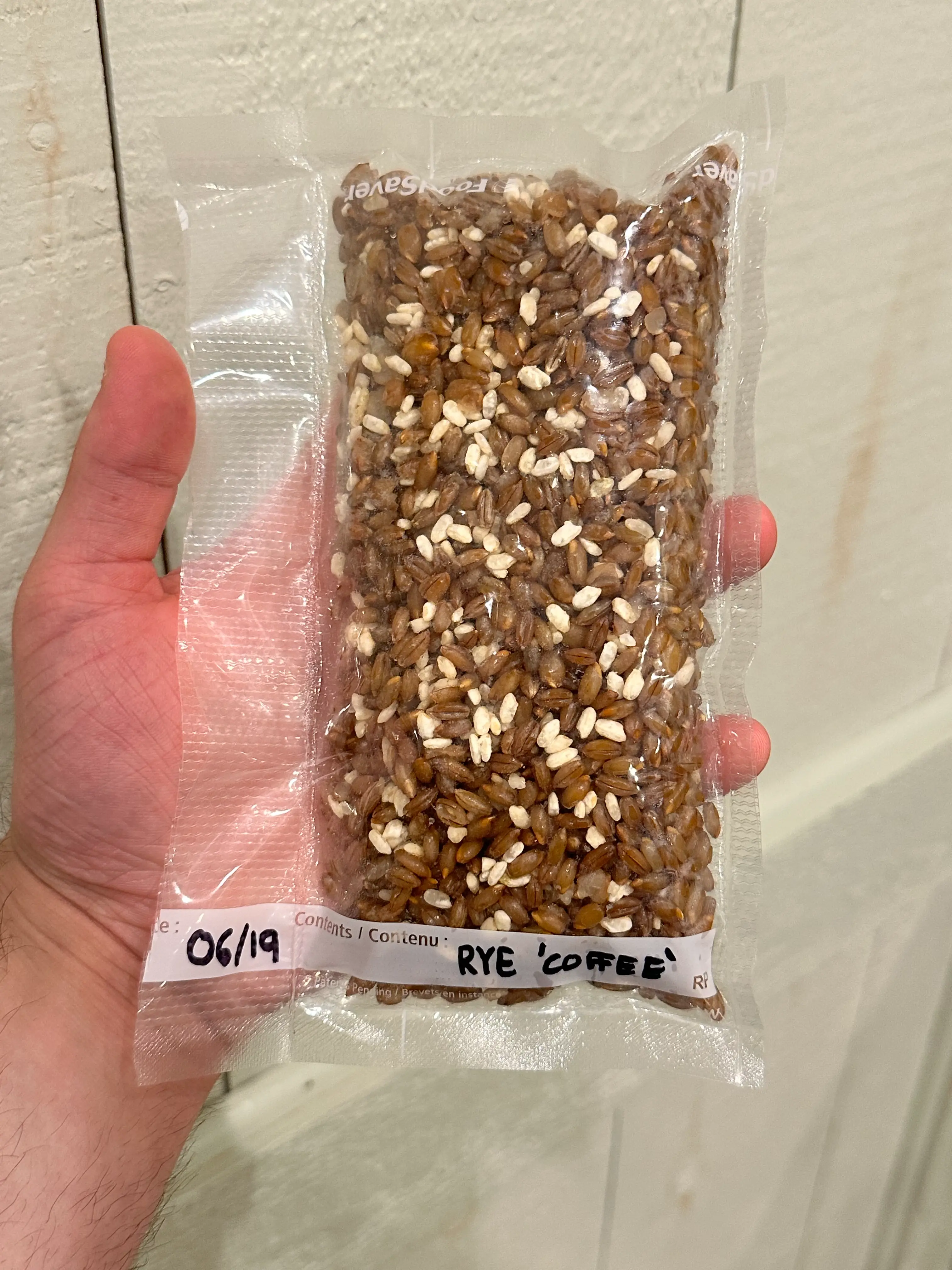
Rye Koji "Coffee"
This is a test to create alternative coffee and chocolate-like varieties using a combination of koji and slow blackening at 140°F. This approach leverages the similarity between Koji enzymes and the e...
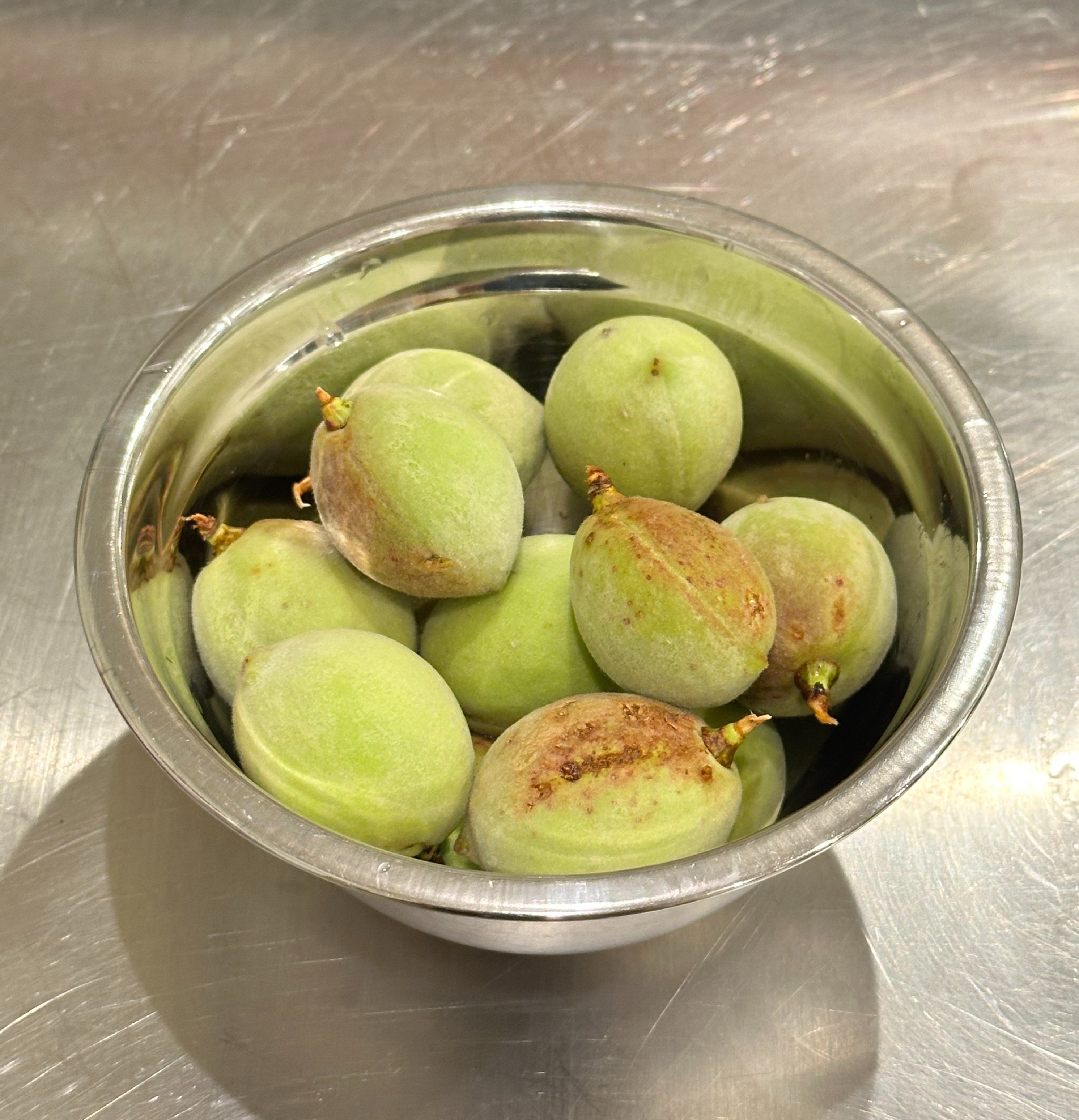
Unripe Peach Cheong
This experiment, started on June 17, is a variation on traditional Korean cheong, which is typically made with unripe plum. This version uses unripe peaches, another type of stone fruit, to explore if...
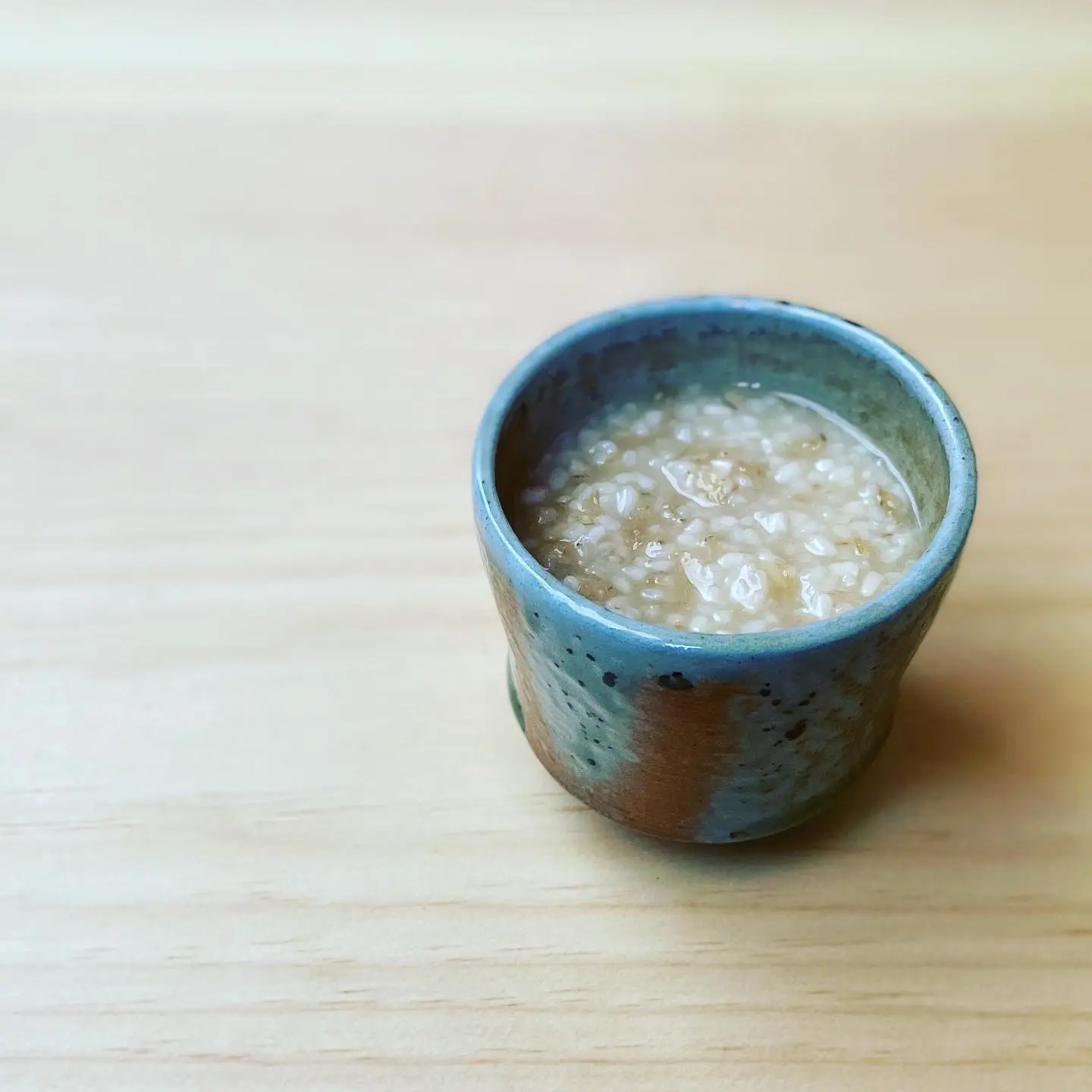
Amazake
Amazake (甘酒) is a traditional japanese beverage typically made from rice and rice koji. Rice is cooked, cooled, and then mixed with equal parts of koji, by weight, and water. The koji enzymatically br...
Toasted Rye Infused Vinegar
The toasted berries were gently broken up using a mortar and pestle, aiming to create several small chunks from each berry.